

Everything You Need to Know About Building Strong, Lean & Defined Arms
The science of arm definition, the muscles that matter most, the exercises worth your time, and the simple training principles that actually create visible results

THE FIT & FOCUSED FILES: Body Composition Series
I know many of you have been enjoying the Fit & Focused Files, so I wanted to do something a little different and fun for the summer! Over the next few months, we’re diving into a new limited Body Composition Series with detailed guides that break down the science, training principles, and habits behind some of the most common health and fitness goals.
I’m going to be covering everything from arm definition and glute development to muscle growth, metabolism, recovery, and more. My goal is simple: help you understand how your body actually works so you can spend less time chasing fitness myths and more time making real progress!
To kick off the series, we’re tackling one of the most common health and fitness goals: building strong, lean, and defined arms!
Summer is here, which means halter tops, backless dresses, and long days spent at the beach or by the pool. I know for many of us, it can also bring up a familiar set of insecurities around our arms, shoulders, and back.
So if you've ever found yourself searching for "toned arms" workouts or wondering why your arms aren't changing despite all your efforts, you're not alone. In this guide, I’m breaking down what actually creates strong, lean, defined arms without crash diets, endless push-ups, or spending hours doing random arm workouts that don't deliver the results you're looking for!
What Does "Toned" Actually Mean?
Before we go any further, let’s talk about the word toned. It’s one of the most popular terms in fitness, yet it’s not actually a scientific or physiological term. Despite what countless workout programs and magazine headlines would have you believe, there isn’t a special type of exercise that “tones” a muscle.
When most people say they want toned arms, what they really mean is that they want more visible muscle definition. And that definition comes from two things: building muscle and reducing the layer of body fat covering it. In other words, the equation for arm definition is actually surprisingly simple: more muscle + lower body fat = greater visible definition. The rest of this guide will show you how to influence both!
The Anatomy of Strong, Defined Arms
Strong, defined arms are about much more than bicep curls. Before we get into workouts, sets, reps, and training plans, it's helpful to understand what we're actually trying to build. One of the biggest reasons people struggle to see results is because they focus on random exercises without understanding which muscles contribute to the look they're after.
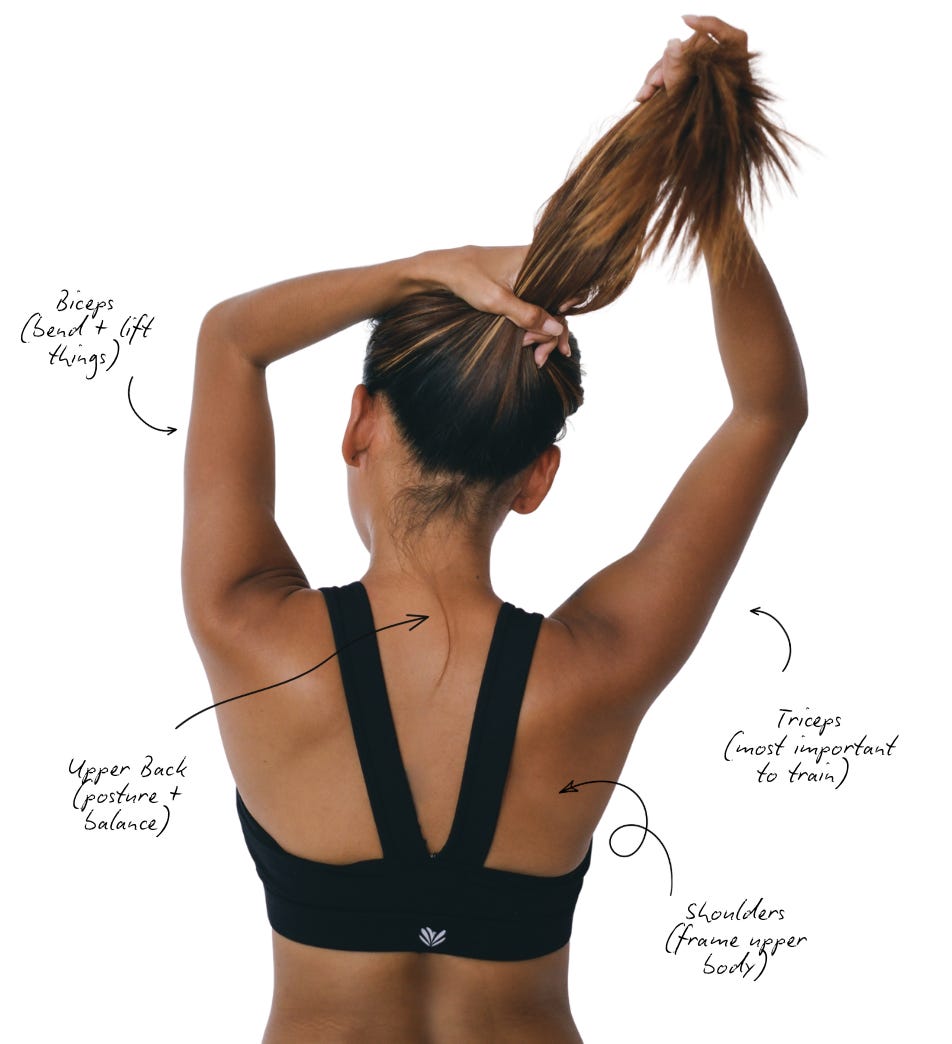
The good news is that building strong, defined arms isn't about targeting dozens of different muscles. A handful of key muscle groups are responsible for most of the shape, strength, and definition people associate with lean, athletic arms. Once you understand their role, it becomes much easier to train with purpose and get better results from the time you spend exercising.
The Triceps: The triceps are located on the back of your upper arm and help straighten your arm when you push, press, or reach. They make up most of the muscle in the upper arm, which is why they have such a big impact on how your arms look. If your goal is more visible arm definition, the triceps are one of the most important muscles to train!
The Biceps: The biceps sit on the front of the upper arm and help you bend your elbow and lift things toward your body. They contribute to the shape of the arm and are often the muscle people think about first when they hear “arm workout.” The mistake many people make is focusing almost entirely on bicep curls while neglecting the muscles that have an even bigger influence on overall arm definition.
The Shoulders: Your shoulders help create the shape and frame of your entire upper body. Well-developed shoulders can make your arms look stronger and more defined, even before significant changes occur elsewhere. The side part of the shoulder (called the lateral deltoid) is especially important because it helps create that athletic, sculpted look many people are after.
The Upper Back: The upper back doesn’t get much attention in most arm workouts, but it plays a much bigger role than many people realize. Strong upper-back muscles help improve posture, support healthy shoulder movement, and create a balanced, toned-looking upper body. They also help your shoulders sit in a better position, which can subtly improve the appearance of your arms.
Why Your Arms Might Not Be Changing
Next, let’s take a quick look at some of the most common mistakes women make when trying to build lean, defined arms.
Personally, upper-body workouts have always been my favorite, but I’ve definitely made every single one of the mistakes below at one point or another. If you’ve been doing arm workouts consistently but aren’t seeing the results you expected, there’s a good chance one or more of these habits could be getting in the way.
Understanding what isn’t working is just as important as knowing what is, so let’s start by clearing up a few of the biggest misconceptions around arm training!
Common Mistake #1: Doing Random Workouts Every Week
If you’re constantly switching between different arm workouts, challenges, and fitness trends, it can be difficult to make meaningful progress. While variety can keep exercise interesting, your muscles respond best to a consistent training stimulus over time. When your workouts are always changing, it becomes harder for your body to adapt and harder for you to tell whether you’re actually getting stronger.
Common Mistake #2: Only Training Biceps
When you think about arm workouts, bicep curls are probably one of the first exercises that comes to mind. The problem is that the biceps are only one piece of the puzzle. If most of your arm training revolves around bicep exercises, you’re likely overlooking other muscle groups that contribute significantly more to the overall shape, strength, and definition of your arms.
Common Mistake #3: Using the Same Weights Forever
Your body adapts to the demands you place on it. If you’ve been using the same pair of dumbbells for months (or even years) your muscles may no longer be receiving enough of a challenge to continue changing. This is one of the most common reasons progress slows, even when you’re staying consistent with your workouts.
Common Mistake #4: Avoiding Challenging Sets
Many women have been told that light weights and endless repetitions are the secret to lean, toned arms. As a result, you may find yourself stopping a set the moment it starts to feel difficult. The issue is that muscles need a meaningful challenge in order to adapt. If every workout feels easy from start to finish, your body has very little reason to become stronger or build additional muscle.
Common Mistake #5: Expecting Results Faster Than Biology Allows
It’s easy to underestimate how long meaningful physical changes actually take. Social media is filled with dramatic transformations and promises of quick results, which can create unrealistic expectations. If you expect visible changes within a few weeks, you may end up feeling discouraged and abandoning a plan that simply needed more time to work.
Now that we’ve covered the foundations and some of the most common mistakes, we can move on to the fun part: how to actually build strong, lean, defined arms.
In the rest of this guide, I’ll walk you through the principles that have the biggest impact on arm definition, the reasons some exercises deliver better results than others, and how to make the most of the time you spend training!
Here’s what you’ll learn:
The training principles that create visible arm definition and why they matter
How to identify the exercises that are actually moving you closer to your goals
A simple framework for building stronger arms without spending hours in the gym
The role nutrition plays in revealing the muscle you’ve worked hard to build
What realistic progress looks like over the coming weeks and months
The overlooked mindset shift that can completely change your long-term results
The 5 Principles That Actually Build Arm Definition

It’s easy to get caught up in finding the perfect workout, but results rarely come from a single exercise or routine. They come from consistently applying a handful of proven principles over time.
The five concepts below are the foundation of developing arm definition. Everything else in this guide (from exercise selection to workout structure and long-term results) becomes much easier to understand once you grasp these fundamentals!
